
Volvo and Mercedes Truck Fuel Tanks: When Is It Better to Replace Than Repair?
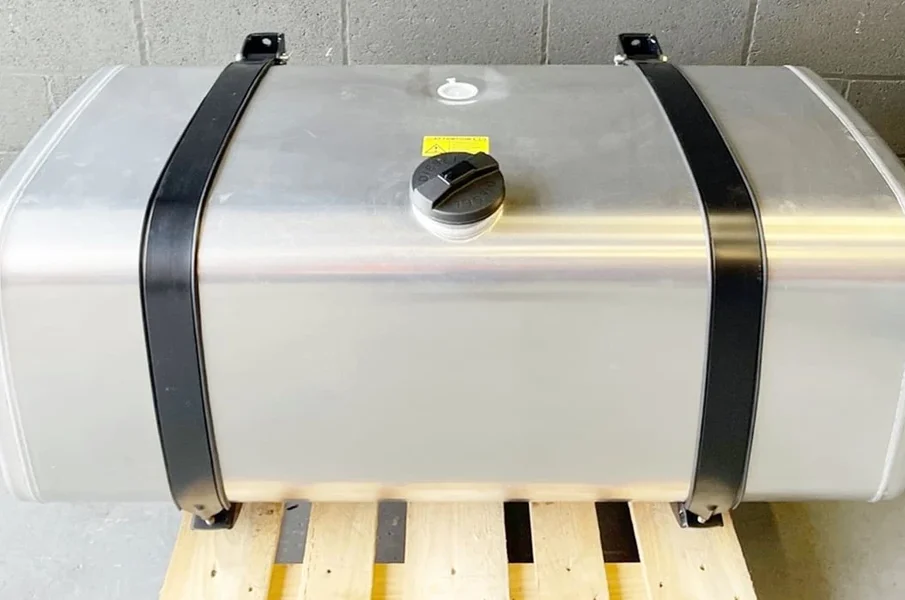
A damaged truck fuel tank does not always need replacing straight away.
In some cases, a small localised issue may be repairable. In others, continuing to patch an ageing tank can become false economy, especially if corrosion, impact damage or repeated leaks are starting to affect reliability.
For operators looking for truck fuel tanks for Volvo or fuel tanks for Mercedes, the most important decision is not simply finding a replacement. It is knowing when replacement is the more practical long-term option.
That decision can affect downtime, workshop costs and how quickly the vehicle can return to service.
Look at the Overall Condition, Not Just the Leak
A leaking tank may appear to have one obvious fault, but it is worth checking the wider condition before deciding what to do.
A small puncture caused by external damage is very different from widespread corrosion.
Areas worth checking include:
- the lower section of the tank;
- mounting points;
- seams and welded areas;
- filler neck condition;
- sender unit area;
- signs of previous repairs;
- corrosion hidden behind straps.
If the rest of the tank is structurally sound, repair may still be worth considering.
If several areas are deteriorating at the same time, replacement can make far more sense.
Repeated Repairs Can Become Expensive
One of the clearest signs that replacement may be the better option is when the same tank keeps coming back into the workshop.
A repair may solve one leak only for another weak point to appear several months later.
Each visit creates more labour, more vehicle downtime and another interruption for the operator.
For high-mileage commercial vehicles, reliability is often worth more than squeezing the last bit of life out of a badly deteriorated component.
This is particularly relevant for fleet operators who need predictable maintenance rather than repeated unplanned repairs.
Check the Tank Mountings at the Same Time
Sometimes the fuel tank itself is only part of the problem.
Straps, brackets and rubber mounting components can wear or corrode over time. If those parts are damaged, they can place additional stress on the replacement tank.
This is why fitting a new tank without checking the surrounding hardware is not always enough.
A proper inspection should include the complete mounting arrangement.
If anything is loose, distorted or heavily corroded, it is usually better to deal with it at the same time.
Volvo and Mercedes Configurations Can Vary
Truck fuel tanks are not one-size-fits-all components.
Even within the same manufacturer, dimensions and layout can change depending on model, chassis specification and intended use.
When sourcing truck fuel tanks for Volvo, operators should check more than just capacity.
The same applies when looking for fuel tanks for Mercedes.
Details such as length, height, depth, filler neck position, side of fitment, mounting locations and sender unit arrangement can all affect compatibility.
Having an OEM reference, VIN, registration or accurate tank measurements available can make the identification process much easier.
OEM-Compatible Tanks Can Reduce Replacement Costs
A genuine manufacturer-supplied tank is not always the only option.
M W Truck Parts supplies both OEM-compatible and bespoke truck fuel tanks for major commercial vehicle makes, including Volvo and Mercedes.
The range includes high-grade, laser-welded aluminium tanks and selected painted steel options, providing a cost-effective alternative to buying genuine where a compatible replacement is available.
M W Truck Parts also works with ISO 9001:2015 accredited manufacturers, with selected tanks held in stock for immediate dispatch and a wider range available to pre-order.
For advice on replacement tanks or compatibility, operators can contact:
M W Truck Parts
Website: https://mwtruckparts.co.uk/product-category/tanks-2/
Email: sales@mwtruckparts.co.uk
Tel: +44 (0)1262 601600
When Does Bespoke Make More Sense?
Not every truck remains in a standard factory layout.
Commercial vehicles are often modified for specialist work, body conversions or hydraulic applications.
In these cases, the original fuel tank dimensions may no longer be ideal.
A bespoke tank can sometimes offer a better solution, especially where space, mounting position or capacity requirements have changed.
This can be particularly useful for specialist commercial vehicles where an off-the-shelf replacement is not available or does not suit the current chassis configuration.
Aluminium or Steel?
Material choice can also influence the replacement decision.
Aluminium tanks are widely used because they offer a strong balance of durability, weight saving and corrosion resistance.
Painted steel tanks can also be suitable depending on the original specification and working environment.
There is no single correct answer for every vehicle.
The better option is the one that matches the truck, the application and the expected working conditions.
Think About Downtime as Well as Purchase Price
The cheapest tank is not always the lowest-cost option overall.
If a poor fit delays installation or a badly specified replacement has to be returned, the cost of vehicle downtime can quickly exceed the saving made on the part itself.
This is why correct identification matters.
For busy operators, getting the right component first time can be just as important as the purchase price.
Replace Before a Small Problem Becomes a Bigger One
A fuel tank that is showing widespread deterioration is unlikely to improve with time.
Corrosion, weakening seams and damaged mountings can all increase the risk of further problems.
If repair is becoming repetitive, replacement may provide the more reliable long-term solution.
For businesses searching for truck fuel tanks for Volvo or fuel tanks for Mercedes, the best approach is to assess the full condition of the existing tank, confirm the vehicle specification and compare the cost of repair against a suitable replacement.
M W Truck Parts can supply OEM-compatible and bespoke fuel tank options for a wide range of commercial vehicle applications, helping operators source practical replacements while keeping downtime to a minimum.