
The Way Of Modern Technology Makes Dental Implant Treatment Planning Better
Implants have been around a long time, and in the last 10 years alone, we’ve learned so much about dental implant treatment. Digital technology has revolutionised how dentists evaluate, plan and execute implant procedures. For decades, it was grounded in manual measurements and antiquated imaging; now it leverages highly detailed digital tools, enhancing accuracy, efficiency and patient outcomes.
With rapid advancements in technology, patients receiving Sydney Dental Implants are receiving tailored treatment plans and enhanced confidence through the implant process. Innovations in the modern world now enable dental professionals to understand each unique oral structure of their patients before they even start treatment.
The Shift Toward Digital Diagnostics
The use of digital diagnostic tools is one of the most important developments in implant dentistry. Standard X-rays and standard dental impressions provided relevant information but are limited in terms of revealing detailed anatomy.
As of today, sophisticated digital imaging systems can replicate the teeth, gums and jawbone with spectacular accuracy! These high-resolution images allow dentists to assess bone density, locate critical anatomical structures, and recognise potential complications prior to commencing treatment.
The more information collected early in the planning phase, the more predictable treatment strategies can be developed, and uncertainty during the procedure can be minimised.
Three-Dimensional Imaging Enhances Precision
Three-dimensional imaging is now a helpful element of implant treatment planning. 3D scans are able to give a comprehensive view of the complete three-dimensional information about the oral anatomy at once from multiple angles, unlike two-dimensional images.
With this technology, it is possible to assess for height, width, and quality of the jawbone with astonishing accuracy. It aids in locating nerves, sinus cavities and other structures that should be avoided during implant placement.
The precision this level of technology provides goes a long way to ensuring safer treatment planning and improved treatment success for our patients undergoing Sydney Dental Implants procedures.
Digital Treatment Simulation
Recent software programs have enabled dental professionals to simulate implant surgical procedures prior to actual treatment. With digital models of the patient’s mouth, clinicians can place implants and assess alternative treatments virtually.
These simulations, shot before the actual restoration takes place, give a sense of how the final result will operate and what it will look like. These corrections can be performed virtually before any actual work is done, rendering a more predictable user journey.
Patients also benefit from visualising the suggested treatment plans. Sometimes seeing a computer rendering of what the outcome might be like helps patients better understand the process and feel comfortable proceeding.
Improved Accuracy Through Guided Surgery
As technology has advanced, new approaches have emerged to convert digital treatment plans into real-world actions. Computer-generated information from guided surgery systems can serve as a customised implant fixture to guide the surgeon during implant placement and facilitate unloading.
Such guides assist in making certain that the implants are located within contours specified by a preplanned plan. More accuracy helps the outcomes be stable, restorative and even faster.
Since implant placement occurs according to a specifically designed digital plan, treatment can often be executed more consistently than that of conventional freehand techniques.
Better Patient Education and Engagement
But technology is not just helping clinicians. And it is also making the experience better for patients. Tools, including interactive software and digital scans, as well as free trials of visual treatment presentations, aid the patient in comprehending their condition and proposed remedies.
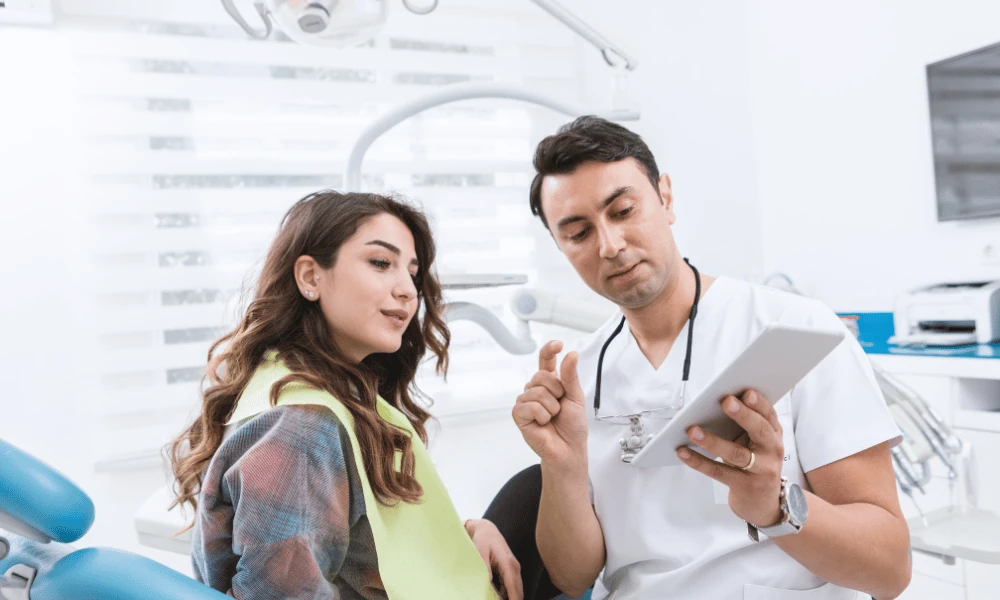
Instead of simply explaining verbally, dentists can provide patients with very informative pictures and treatment simulations. This kind of visual design, he continued, informs patients and helps them envision what to expect.
Patients tend to be more comfortable, confident and happy about the treatment journey when they are educated and involved.
The Future Of Implant Treatment Planning
The digital technology applied to implant dentistry is increasingly integrated. AI, increasingly sophisticated planning software and ever-advancing imaging systems will further the already-high precision and efficiency of treatments.
These technologies are enabling dentists to better develop more personalised treatment plans according to each patient. Future implant procedures are probably going to be progressively more surprising, effective and patient-driven as we keep on improving as a profession in the coming years and indeed many years.
Modern treatment planning has moved the dental implant process from a look-at-the-image approach at the time of placement to the final restoration. Technology is allowing patients to receive more accurate and effective treatment that yields reliable, natural appearance results through digital imaging, virtual simulations, guided surgery, and improved communication.