Hiroshima and Miyajima: A Guide to History, Reflection, and Island Shrines
Few places in Japan carry as much emotional weight as Hiroshima. The city is known around the world for the events of 1945, yet today it is a vibrant, welcoming place with tree-lined streets, a lively food scene, and a deep commitment to peace. Just offshore, the island of Miyajima offers a striking contrast, with its sacred shrine, forested mountain, and famous floating gate.
Together, Hiroshima and Miyajima make a meaningful and memorable pairing. Travelers visiting the region on a Japan cruise or a land itinerary can experience both in a single day, though many prefer to take their time. Here is a guide to visiting thoughtfully and making the most of each place.
Hiroshima Peace Memorial Park
The Peace Memorial Park sits near the area most directly affected by the atomic bombing. It is a quiet, reflective space filled with monuments, gardens, and memorials dedicated to the victims and to the hope for a world without nuclear weapons.
- Cenotaph for the A-bomb Victims: An arch-shaped monument framing the Peace Flame and the Atomic Bomb Dome.
- Children’s Peace Monument: Surrounded by colorful paper cranes sent from around the world.
- Peace Flame: A flame meant to burn until nuclear weapons are abolished.
The Atomic Bomb Dome
The skeletal remains of a former exhibition hall stand as a powerful reminder of the destruction. Preserved as it was after the bombing, the dome is recognized as a UNESCO World Heritage Site and is one of the most recognizable symbols of peace in the world.
The Peace Memorial Museum
The museum documents the bombing and its human impact through personal belongings, photographs, and survivor testimonies. It is a moving experience, and visitors should allow enough time to absorb it. More information is available from the Peace Memorial Museum.
Visiting With Respect
- Keep voices low in memorial areas.
- Follow photography guidance inside the museum.
- Take time to read survivor stories.
- Consider folding or leaving a paper crane as a gesture of peace.
Miyajima and Itsukushima Shrine
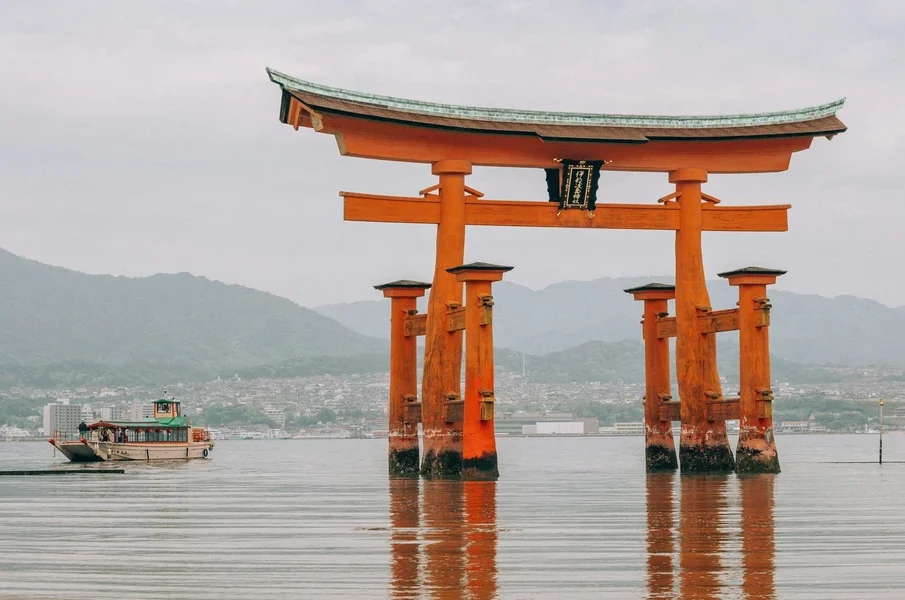
Miyajima, officially known as Itsukushima, is a short ferry ride from the mainland. The island’s Itsukushima Shrine is built over the water, and at high tide it appears to float. Its large vermilion torii gate, standing in the sea, is one of Japan’s most photographed sights. The shrine is also a UNESCO World Heritage Site.
Timing the Tides
- High tide: The torii and shrine appear to float on the water.
- Low tide: Visitors can often walk out across the sand toward the gate.
- Tip: Check tide tables before visiting to see both views if possible.
More to Explore on Miyajima
- Mount Misen: Hike or take a ropeway up for sweeping views of the Seto Inland Sea.
- Daisho-in Temple: A peaceful temple with statues and winding paths.
- Omotesando shopping street: Lined with snack stalls and souvenir shops.
- Friendly deer: Deer roam freely, but visitors should not feed them.
Local Flavors to Try
- Hiroshima-style okonomiyaki: A layered savory pancake with noodles, cabbage, and toppings.
- Oysters: The region is known for oysters, often grilled or fried.
- Momiji manju: Maple-leaf-shaped cakes filled with sweet bean paste or other flavors.
A Journey That Stays With You
Visiting Hiroshima and Miyajima offers a rare combination of solemn reflection and natural beauty. Travelers leave with a deeper understanding of history, a renewed appreciation for peace, and memories of a sacred island shrine rising from the sea.


Leave a reply
You must be logged in to post a comment.